
Bean Pioneers Agriculture Education For Lamar Elementary Students
PROTECTED CONTENT
If you’re a current subscriber, log in below. If you would like to subscribe, please click the subscribe tab above.
Username and Password Help
Please enter your email and we will send you a password reset link.
by Stephanie Baker
Grace Bean is helping reshape how young students learn about agriculture at Lamar Elementary, while pioneering a program unlike any other in the state.
“This really is my dream job,” Bean said. The position combines her passion for agriculture education with her heart for teaching younger students. The role didn’t exist before this school year.
Bean serves as the only kindergarten through seventh grade certified agriculture teacher in Arkansas, participating in a three-year pilot program partnership with Arkansas Farm Bureau that introduces agriculture education at the elementary level. Under the program, students are assessed each year, and facilitators present their findings at the conclusion of the pilot period.
She is helping introduce agriculture at a young age through classroom projects and discussions on where our food, clothes, and fuel really come from.
“I want my students to know that their food doesn’t come from a grocery store,” she said.
Bean aims to teach her students agricultural literacy early and simply, so they recognize how deeply agriculture is connected to everyday life.
“Agriculture is everything,” she said. “It’s your food, your clothes, gas in your car, and your bed at night.”
Agriculture education is not a preparation for a trade; it’s a necessary education for everyone, Bean explained.
“You need a doctor sometimes, and a lawyer, rarely if ever. But you need a farmer at least three times a day,” she said.
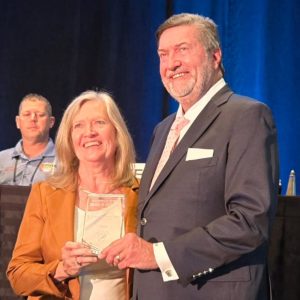
Bean has already been recognized for her work, recently receiving a national “Agriculture in the Classroom” teacher scholarship through Farm Bureau. She is also preparing to present at the organization’s conference, highlighting the program’s early impact and approach to elementary agricultural education.
Students in her classroom are introduced to those concepts through hands-on learning and interactive projects designed to make agriculture tangible and engaging.
A central part of her classroom is Cosmo, a two-year-old New Zealand Blue rabbit who serves as an active learning tool for students. Cosmo enjoys fresh herbs grown in a classroom Aerogarden and his favorite snack, bananas. Through caring for Cosmo, students learn responsibility and animal care.
Bean prefers interactive projects, following the idea of “learning to do, doing to learn.” Students participate in a wide range of activities designed to connect agriculture to science and everyday experiences.
Younger students begin with foundational concepts. Kindergartners dissect beans to learn about the life cycle of a plant and write thank-you letters to local farmers, including those involved in turkey, chicken and peach production, reflecting Johnson County’s agricultural heritage. They also take part in “source search” activities, identifying how everyday items are connected to agriculture.
First grade students have hatched chicks in the classroom. One student, inspired by the experience, created a detailed drawing of the growth cycle of a chicken inside the egg. The drawing now hangs near Bean’s desk as a reminder of the impact the lessons are having.
“It was a moment when I realized how much the students were really understanding and were excited about learning agriculture,” Bean said.
As students get older, the lessons grow more complex. Third graders experiment with soil painting to explore different soil types and colors, and simulate pollination using pom-poms. Middle school students design and build model hen houses out of shoeboxes, some of which even including working lights, while learning about different poultry housing styles.
“The elementary agriculture program has been a valuable addition, helping students understand the connection between farms and the many industries they support,” Lamar Elementary Principal Jessica Hughes said. “Through this program, students are learning how agriculture plays an important role in everyday life, from the food we eat to the development of medicine. They enjoy working together and taking part in hands-on activities with plants and animals, which makes learning both meaningful and engaging. Mrs. Bean brings a warm and kind presence to the classroom, and she is a wonderful asset to our elementary school. Overall, the program has strengthened the connection between our school, our community, and the importance of agriculture in our area.”
Bean emphasizes that agriculture education goes far beyond traditional stereotypes. Her passion for agriculture literacy is rooted in her upbringing. She grew up on three acres and was active in FFA during high school, when she showed cattle and developed an early connection to agriculture. Her father, a poultry veterinarian and strong advocate for agriculture, also influenced her career path.
Today, she and her husband, Clarksville Basketball Coach Dillon Bean, live on a small farm next to her extended family, where they keep a small flock of ducks and continue to stay connected to agricultural life. Outside the classroom, Bean enjoys needlepoint and is involved in the Farm Bureau Women’s Committee.
“It is more important now than ever that children know where their food comes from and are advocates for the agriculture industry. Teaching them at a young age where their food comes from and about the industry ensures they will be well-informed consumers and understand the importance of the agriculture industry on the state of Arkansas and the nation,” said Jeanie Rowbotham, Johnson County Extension Agent-4-H, who is also on the women’s committee.
Through her classroom, Bean is working to build that understanding early, connecting students not just to agriculture, but to the systems that shape their daily lives.
Read this story and others in the April 22 issue of The Graphic, available online and at businesses throughout Franklin and Johnson counties. Subscribe or donate here to support more hometown journalism.

Grace Bean and Cosmo