
CCU Approves Agreements Defining Utility Relationship With Serverfarm
PROTECTED CONTENT
If you’re a current subscriber, log in below. If you would like to subscribe, please click the subscribe tab above.
Username and Password Help
Please enter your email and we will send you a password reset link.
LOCAL GOVERNMENT COVERAGE – CLARKSVILLE CONNECTED UTILITIES
by Megan Wylie
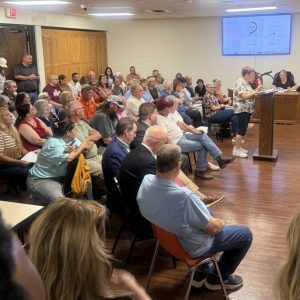
The Clarksville Connected Utilities (CCU) Commission unanimously approved two agreements Friday, July 17, establishing how the utility will provide service to the Serverfarm data center and how costs associated with the project will be paid.
The Electric Service Agreement (ESA) and Contribution in Aid of Construction Agreement (CIAC) define Serverfarm as a CCU customer, outline the process for providing electric service for the first phase of the project and require the company to fund infrastructure needed to serve the facility.
Throughout the meeting, Commissioners emphasized the agreements are intended to protect CCU and its customers by ensuring project-related costs are paid by Serverfarm rather than absorbed by the utility.
“One thing that I think concerns all of us, the public included, is making sure that this is solely covered, cost-wise, by them, not at any taxpayer cost or any CCU funding,” Commissioner Jason Shook said.
Interim General Manager Eric Heinrichs said the agreements were developed to limit CCU’s financial exposure while providing a framework for serving a customer with projected electricity demand significantly larger than a typical utility customer.
ESA Defines Utility-Customer Relationship
The ESA establishes how Serverfarm will be billed for electric service and how revenue from the project will flow to CCU.
During the meeting, Heinrichs referred to information provided by CCU attorney Jason Carter regarding the project’s billing structure. During Phase 0, which includes the initial 18 megawatts of service expected by Dec. 1, Serverfarm will be billed under CCU’s standard industrial/commercial rate. In Phase 1, which includes an additional 300 MW of service, Serverfarm will be billed under the Oversized Demand Rate approved by the Clarksville City Council in March.
Revenue generated under the Oversized Demand Rate will depend on how the facility receives power. If Serverfarm operates through grid-connected service, which CCU identified as the company’s ultimate goal, CCU would receive a fixed monthly service availability charge ranging from $480,000 to $960,000 based on usage, along with a monthly administrative charge based on electricity consumption.
Using projected future demand of 1,046 MW and a 90% capacity factor in a fully grid-connected operation, CCU estimates typical monthly revenue could be approximately $3.2 million, or roughly $39 million annually.
Those revenues would be paid directly to CCU and would be separate from pass-through charges for electricity market costs, transmission costs and generation costs, which would also be paid by Serverfarm. Carter noted revenue would not increase significantly while the facility is operating on locally generated power and is not connected to the electric grid.
According to information presented during the July 13 Clarksville City Council meeting, the facility is expected to initially operate on a “power island” constructed by Solaris, using natural gas generation until CCU begins delivering power, which is currently expected in December.
Heinrichs also noted that some of the infrastructure installed for the project will become CCU-owned assets after construction is complete. Although Serverfarm and its contractors will fund the installation of the infrastructure, CCU will have oversight during the process and will be responsible for operating and maintaining portions of the system once it is placed into service.
Heinrichs said a portion of the revenue generated from the project will be used to maintain that infrastructure over its expected lifespan.
Heinrichs said, “When we’re talking revenue, a chunk of that is going to maintain that (infrastructure) for 30 years.”
Heinrichs said this version of the ESA applies only through the expected Dec. 1 delivery of 18 MW of power. Each future phase of the project would require additional agreements or amendments.
Commissioners also discussed how the additional revenue could affect CCU’s long-term financial planning and future utility improvements.
Heinrichs said the additional revenue from a large customer such as Serverfarm could provide financial relief for the utility and help with future rates.
“Despite all the other stuff that comes along with the data center, it is a little bit of financial relief on us, and it will be helpful on the rates moving forward with them here,” he said.
Shook said major infrastructure improvements would require funding regardless and revenue from a large customer could help reduce the burden on existing customers.
“We are one of the lowest-rate municipal utilities in the state,” Shook said. “If we had to make major upgrades without this revenue, we’d have to find another way to pay for them.” He stated that could mean rate increases or even requesting a millage.
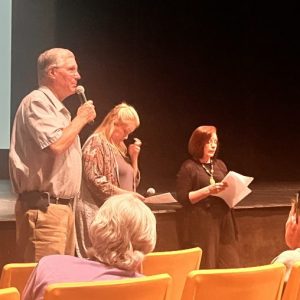
During public comment, resident Debra Hobbs questioned whether CCU or the city could issue municipal bonds to fund needed utility upgrades instead of relying on additional revenue from the data center.
Heinrichs said bonds could provide funding for improvements, but the utility would still have to repay the debt through monthly debt service payments.
“You get that payment, but you also have to be able to pay that debt for 20 years,” Heinrichs said. “Even if we went to a bond right now, I’d still have to raise the rates to pay for the bond.”
Resident Jodi Lovell also questioned whether CCU customers would directly benefit from the projected $39 million in annual revenue.
Shook said the additional revenue would not be distributed directly to customers but could help offset future costs associated with maintaining and upgrading the utility system.
Another question during the public comment period was from Judy Penny, who asked how sales tax collected from the project would be handled and whether any exemptions or rebates would apply.
Shook explained CCU collects sales tax as required by law and remits those funds to the appropriate taxing entities. “We have no control over the taxes they will pay,” he said, adding any future sales tax exemptions or rebates would be determined by the appropriate governmental entity rather than CCU.
CIAC Establishes Construction Payment Process
The CIAC establishes how project-related infrastructure work will be approved, completed and funded.
Heinrichs described the CIAC as the agreement which governs “how work gets done.”
Before CCU begins any work, he explained, the utility must prepare cost estimates, receive approval from Serverfarm and receive payment according to the procedures outlined in the agreement.
For projects lasting longer than 90 days, Serverfarm would provide rolling 90-day payments, with costs reconciled every 30 days.
“The goal is that our day-to-day operations are never affected and we’re never paying these costs out of our own revenues,” he said.
The agreement also allows CCU to recover administrative expenses associated with managing the project, including potential additional staffing or project management software, which Heinrichs stated are things being considered.
Residents questioned whether the project could create financial risks for CCU if Serverfarm were to experience financial difficulties.
Shook said the agreements are structured so CCU will not advance money for construction and that the utility will not perform upgrades or project-related work without Serverfarm providing payment up front under the terms of the agreement.
If the agreement is terminated, Serverfarm remains responsible for paying for completed work. Shook said the agreement also includes financial protections such as letters of credit and other assurances where required.
Regarding potential disputes, Heinrichs said the agreements require mediation before litigation, with mediation costs shared equally between the parties. Based on information provided by Carter, Heinrichs said mediation is typically resolved quickly and has been successful in more than 80% of cases.
During public comment, it was questioned whether construction should have begun before CCU’s agreements with Serverfarm were finalized. Shook explained the agreements do not authorize construction of the data center but instead define Serverfarm as a CCU customer and establish how project-related costs will be handled.
“We don’t have the power to do that (authorize construction),” he said. “This is us defining, if they come, here’s how they’re going to be charged and here’s how we’re going to make sure there’s no cost to the public.”
He added the city has already issued building permits and the ESA and CIAC agreements only define Serverfarm as CCU’s customer and establish who pays for what.
The Commission unanimously authorized Heinrichs to execute the ESA and later approved the CIAC agreement.
Commissioner Ethan Powell praised Heinrichs and Carter for developing agreements intended to minimize CCU’s financial exposure.
“I feel pretty good about where we are,” Heinrichs said. “We’re covered as much as we legally can be.”
Commissioners present included Chairman LaShainea Pollander, Shook, Blake Neumeier, and Powell. Freeman Wish was absent. Regular meetings of the CCU Commission are held at 4:30 p.m., the fourth Monday of each month in the CCU conference room. The next meeting is scheduled for July 27.
—–
Published In This Week’s Edition
This story appears in the July 22, 2026, edition of The Graphic, available online and at businesses throughout Johnson and Franklin counties.
Support Local Accountability Reporting
Our reporting is made possible by readers, not algorithms.
The Graphic covers the decisions that affect your taxes, schools, utilities, and local government across Johnson and Franklin counties.
We attend and report on:
City councils
School boards
Quorum courts
Clarksville Connected Utilities
Johnson Regional Medical Center board
Your subscription makes this coverage possible.
Become a Subscriber or Donate Today
Related Posts