
Preserving The Past For The Future; Johnson County Historical Society Archives Local History
PROTECTED CONTENT
If you’re a current subscriber, log in below. If you would like to subscribe, please click the subscribe tab above.
Username and Password Help
Please enter your email and we will send you a password reset link.
by Stephanie Baker
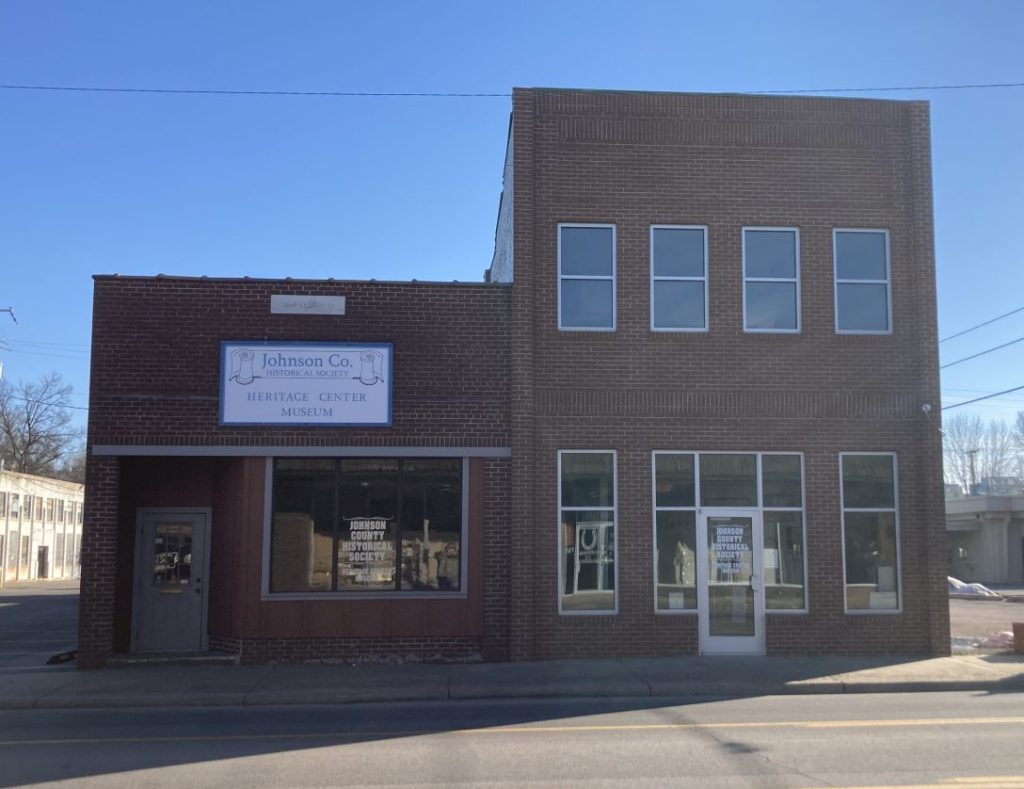
The Johnson County Heritage Center serves as the headquarters for preserving and sharing local history and the Johnson County Historical Society (JCHS). Volunteers dedicate their time to documenting local history, ensuring stories from the past remain accessible to the community for generations to come. Together, these volunteers have curated a collection that spans from early frontier times to today.
Editor Debbie Overbey contributed regularly to the local historical journal throughout her teaching career. Upon retiring, she became a full-time volunteer, spending multiple days each week at the heritage center researching and working toward the writing and release of Johnson County Historical Society’s latest journal issue. The historical journal often chronicles newly discovered local history or topics of current interest among members. Her interest in history began in childhood when she recalls listening to the countless stories of her grandparents, that continue to inspire her dedication to preserving the “many stories” of Johnson County and its residents throughout hundreds of years.
JCHS President Mark Hodge shared highlights of Johnson County’s long history of involvement in wars, including the Civil War, with soldiers fighting on both sides.
“Johnson County was once considered the great frontier. There were the coal mines and the outlaws,” said Hodge.
Clarksville was once considered a frontier town and had a reputation for intense violence, earning it the nickname “Bloody Clarksville.” The area was home to the Osage and later the Cherokee tribes. Coal mining became an important industry, and later, the county became known for its peach production. These events and industries shaped the community in lasting ways, he explained.
He shared his passion for volunteering at the center comes from wanting to preserve local history for future generations.
“If you don’t preserve this history, it will be lost,” said Hodge.
The heritage center houses several specialized rooms, including an art room, an outlaw room, and a research room filled with file cabinets of organized historical information. A small museum also displays artifacts from the county’s history. The society has also begun the long process of digitizing the collection to make it more accessible to researchers and the public.
The volunteers are dedicated to learning proper methods to archive and preserve materials for future generations. The center relies on local residents to submit their family photos, documents, and artifacts, which are carefully copied and included in the center’s growing database.
Overbey stated while large, the collection of recorded Johnson County history remains incomplete. She explained the earliest records, especially of the county’s first decade, often focused on bridge parties and politics, and those featured were disproportionately white and wealthy. The histories of Hispanic, Karen, and black communities are not currently represented, she said, noting it is a personal goal to collect and preserve the history of all of Johnson County’s residents throughout the years, to make sure all populations are properly represented.
People from across the country with ties to the area frequently contact the heritage center in search of family histories connected to Johnson County. Contributions from local families help preserve a broader understanding of the community’s past, and residents are encouraged to share their family photos, documents, and artifacts with the center. Volunteers are trained to evaluate the information, and will make copies of the item to be cataloged so the original documents can be returned to the family. The volunteers have received training from professionals, including the state’s historian, about how to properly handle aging historical materials while retaining the originals, allowing the heritage center to expand its collection and catalog for research, while protecting fragile artifacts, Overbey explained.
Neither the heritage center nor the historical society receives state or county funding. Both rely entirely on membership dues and donations to continue their work and provide these resources to the community. Annual membership costs $30 and includes two print journals and access to the research room. The center also remains in constant need of volunteers who are passionate about local history. In addition, financial support is essential for the center to maintain and grow its collection, whether from new memberships or donations, Hodge explained.
The Johnson County Historical Society and Heritage Center collects, curates, and communicates the sprawling history of the county and the people who lived here. The work being done today ensures the diverse stories of Johnson County will not be lost and will remain accessible for years to come.
The Johnson County Heritage Center is located at 133 W. Main Street in Clarksville. The center is open Tuesday, Thursday, and Friday from 10 a.m. to 4 p.m., and is open Wednesday and Saturday from 9 a.m.-5 p.m., as its volunteers are available. For more information, to donate or volunteer, call 479-754-3334 or email [email protected].
Read this story and others in the Feb. 11 issue of The Graphic, available online and at businesses throughout Franklin and Johnson counties. Subscribe or donate here to support more hometown journalism.